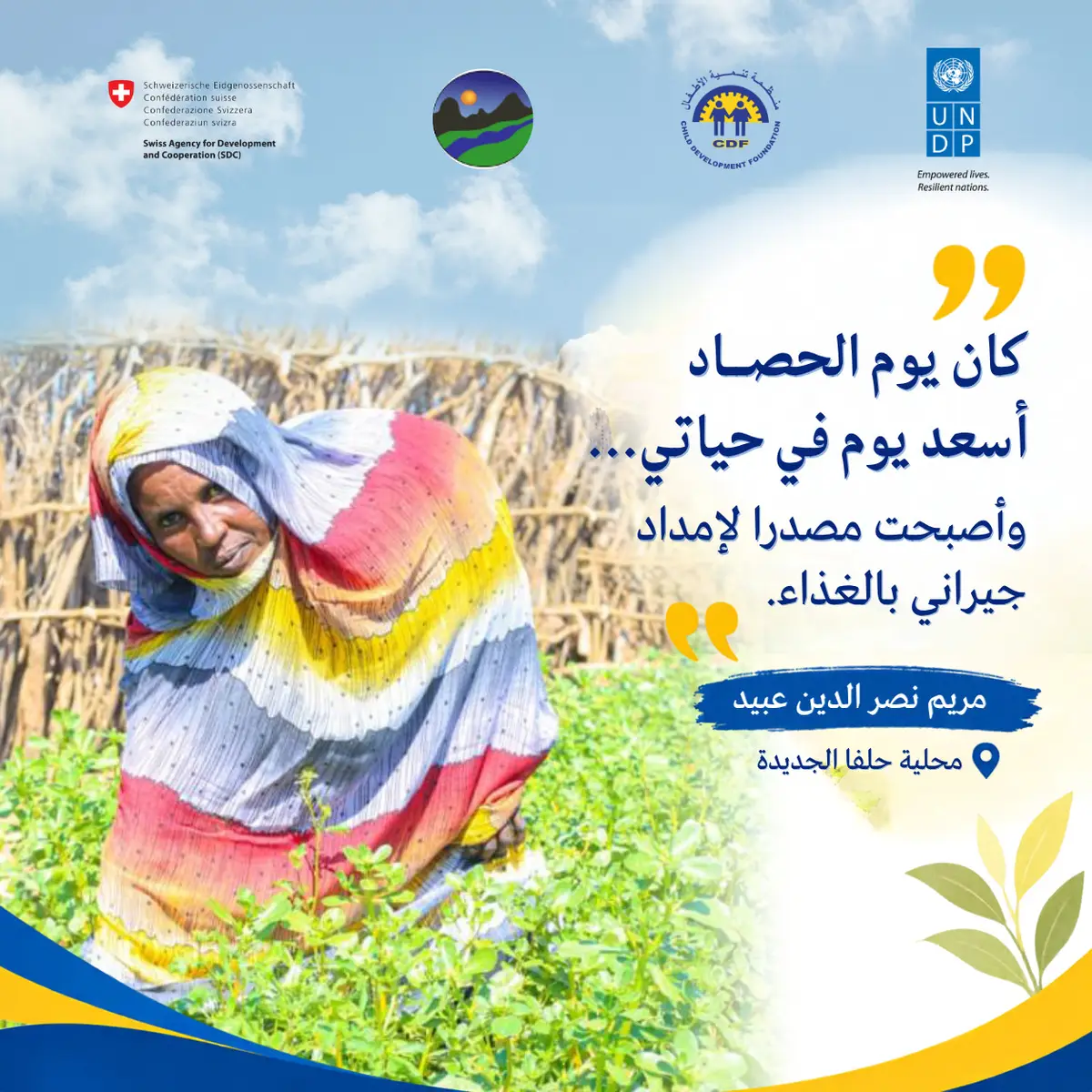
“The harvest day was the happiest day of my life. Through my own effort, I brought variety to my family’s food, and I became a source of food for my neighbours,” says Maryam Nasr al-Din Obeid, 40, from Amarat Al-Khawalda village in New Halfa locality, Kassala State.
The village lies 93 kilometres from the town of New Halfa. Its 1,800 residents live without electricity, a market or public transport. To buy vegetables, Maryam, a mother of two, made a hard journey to neighbouring towns every 10 to 15 days.
Through the project “Strengthening the Resilience of IDPs, Refugees and Vulnerable Host Communities in Eastern Sudan”, we supported 250 men and women from the host community to set up home gardens, known locally as jabarik. Maryam trained in organic farming, efficient water use and natural pest control, and received tools and a range of seeds. On her own initiative, she added tomatoes, chilli peppers and coriander.
Although she carried irrigation water by hand from a distant canal, her garden produced a strong harvest. Fresh vegetables are now part of her family’s meals, and she sold her surplus in the village, earning more than 400,000 Sudanese pounds from just five crops.
We implement the project with the United Nations Development Programme (UNDP), funded by the Swiss Agency for Development and Cooperation (SDC).